

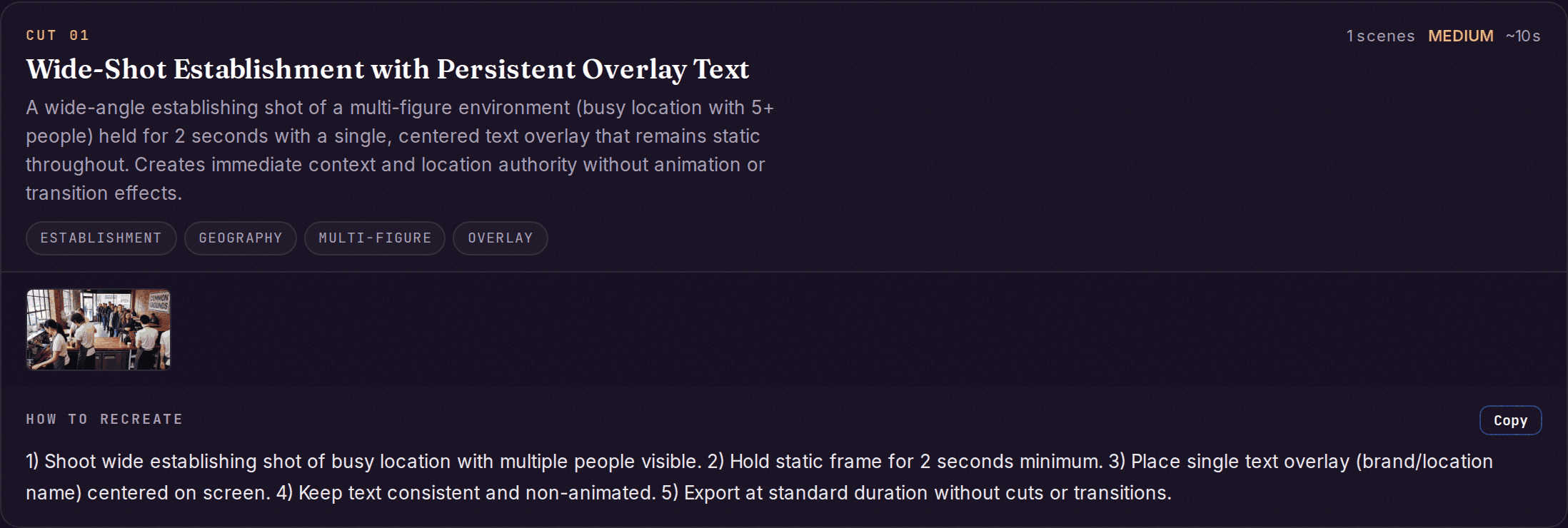
A cut recipe on a live teardown - the technique, tags, and step-by-step production direction.
Scene prompts
Every completed teardown includes scene prompts for the major scenes. Each entry:
For where to paste each field, see Scene prompts.
Cut Blueprints
Each signature cut in The Cuts can produce a deeper Cut Blueprint on demand.
A new Cut Blueprint uses the amount shown on current pricing. Free accounts get one at no charge to try it; paid plans use credits from the first. It saves onto the teardown after success, so reopening it later is free.
The sound half
Visual prompts are half the plan. The Sound layer produces the matching sound recipe: genre, BPM range, SFX palette, key transition cues, and voice style. Sound Kit is the paid asset surface for stems and clips.What to do with it
- Do not use every scene. Pick the hook shot, proof moment, transition, and close before filling the whole timeline.
- Keep
style_notesconstant. Style drift between scenes reads as weak production faster than any single imperfect frame. - Swap the subject, keep the shot. “Close-up of hands on a keyboard” is a shot type; put your product, person, or story into it.
- Use Cut Blueprint for the hard shots. Spend credits where a single cut carries the mechanism you need to understand.
Related layers
The Cuts
The real shots these recipes are derived from.
Scene prompts
Tool-by-tool usage: which field goes where.
Cast & World
Character, location, and object descriptions to use in your planning.
Sound layer
The audio recipe that completes the production plan.